
Trump’s judicial nominees seem to share his white supremacist vision for America
His newest circuit court nominees underscore this point.
The damage done to our democracy following last week’s evisceration of the Voting Rights Act has been swift and harrowing. Just yesterday, the state of Tennessee enacted a new U.S. House map that splits Memphis into three districts — effectively disenfranchising hundreds of thousands of Black residents and shutting them out of our democracy.
Voting rights expert and reporter Ari Berman responded on Bluesky, saying “I just cannot get over the fact that Black voters in Memphis, the city where MLK was assassinated and led the Poor People’s Campaign, will no longer have basic representation in Congress.”
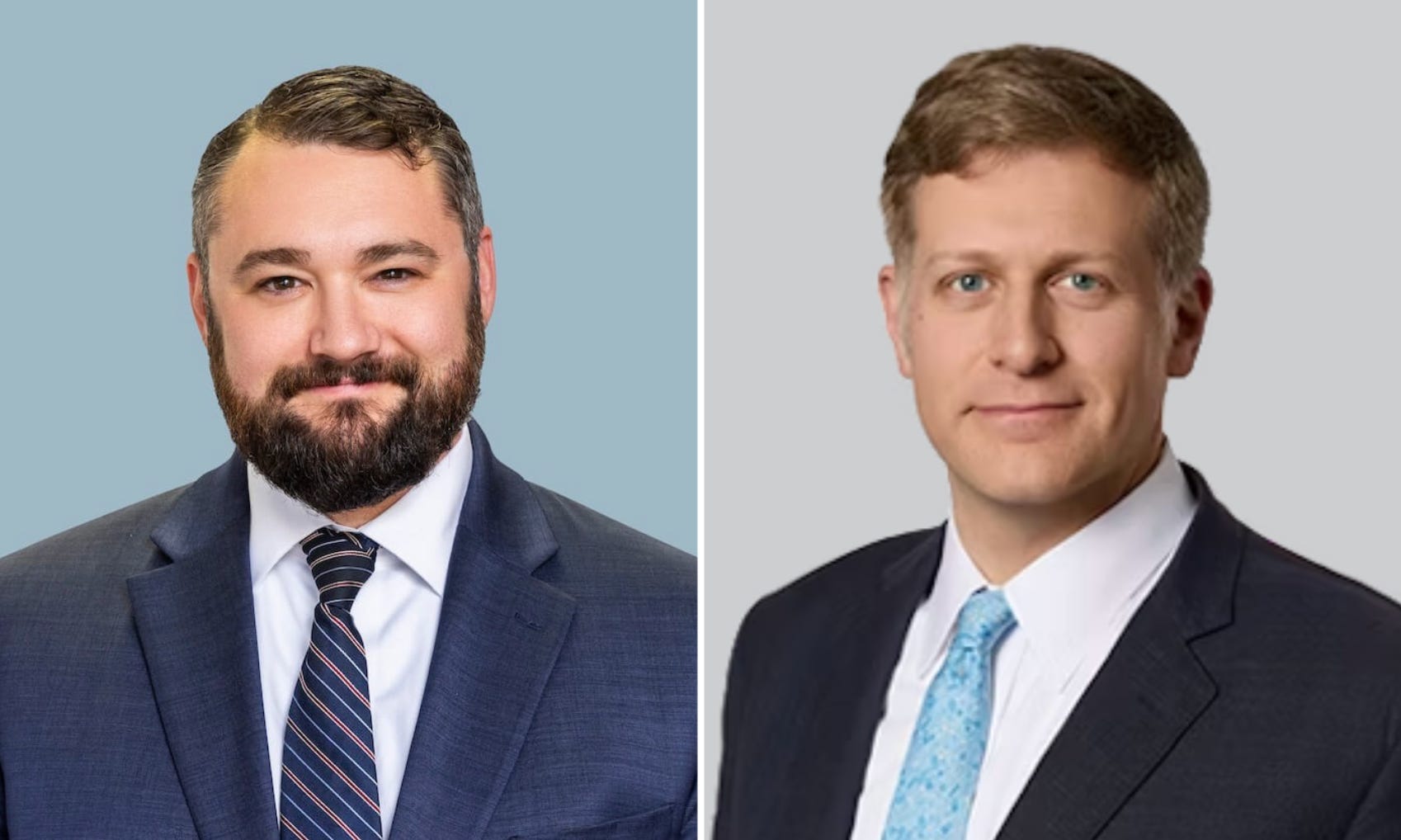
This is white supremacy in action. And as I wrote last week following the Callais decision, Trump’s three Supreme Court appointees made that ruling possible. Trump, who called the decision a “BIG WIN” from the “brilliant” Justice Alito, continues to nominate anti-voting rights judges and individuals who — he believes — share his white supremacist vision for America. His newest selections for the judiciary — two circuit court nominees who will likely appear together before the Senate Judiciary Committee on May 20 — underscore this point.
Benjamin Flowers, for example, who has been nominated to an Ohio seat on the U.S. Court of Appeals for the Sixth Circuit, filed a brief last October before the U.S. Supreme Court on behalf of Restoring Integrity & Trust in Elections. In it, he urged the Court to do away with Gingles, the landmark, four-decade-old case that established factors that courts have continued to use to determine whether a voting practice violates Section 2 of the Voting Rights Act. Last week’s Callais decision, according to the Elias Law Group, “effectively eviscerates this test under the guise of ‘updating’ it for a world where (the Court said) racial discrimination is largely a historical artifact.”
Recently, Flowers worked with Professor Richard Epstein on a brief filed before the U.S. Supreme Court in Trump v. Barbara — the birthright citizenship case (Epstein is the author of a forthcoming book titled “The Myth of Birthright Citizenship”). Alarmingly, their brief states that “Under the conventional view, therefore, children born within the United States to illegal immigrants are automatically made citizens of the United States, entitled to the full panoply of ‘privileges or immunities’ available to other citizens. The conventional view is wrong.”
Flowers, who is listed as the counsel of record, posted on X that it was an “honor” to work on the brief. His law firm’s website in January said that the brief drew from Professor Epstein’s “important and original research on the Citizenship Clause” and argued that children of undocumented parents “do not automatically acquire citizenship at birth.”
Flowers also regularly reposts messages on X that celebrate the demise of DEI, including from America First Legal — the organization co-founded by Stephen Miller. This includes one post from AFL last January celebrating Trump’s executive order that sought to redefine equal opportunity programs as discrimination. It also includes a post from Trump’s EEOC, which quotes Chair Andrea Lucas (appointed by Trump) saying that “Civil rights law is ‘colorblind.’” Last June, Flowers partnered with AFL in filing a lawsuit in the Eastern District of Michigan against the University of Michigan and its Michigan Law Review Association “to halt its rampant racial discrimination” — accusing the law review of adopting a “radical” DEI agenda in violation of federal civil rights law and the Equal Protection Clause.
Last August, Flowers sent a letter alongside Nicholas Barry, senior counsel at America First Legal Foundation, to the chair of the advisory committee to review the law school accreditation process. In it, they contended that the American Bar Association “has actively encouraged law schools — including at least one Ohio-based school — to violate state and federal anti-discrimination laws.” That it came from Flowers and the America First Legal Foundation tells you everything you need to know.
In June 2025, Flowers responded on X to a Columbus Dispatch article titled “Columbus corporations say goodbye to DEI moniker, not to its meaning and practices.” Flowers wrote in response that “DEI’s legality doesn’t change based on what you call it. And the legality of DEI has not changed since the Presidential election — race-conscious policies have long been illegal (and immoral). Companies need to end these practices and fire all lawyers who advise them otherwise.”
And following the Supreme Court’s rolling back of affirmative action in higher education, Ohio Attorney General Dave Yost told the state’s public colleges that scholarships specifically for students of color are unconstitutional under the Supreme Court’s decision. Flowers, alongside the ACR Project, wrote to AG Yost in February 2025 to allege that Wright State and Youngstown State weren’t complying and were still offering dozens of “race-exclusive” scholarships — and they threatened a lawsuit if the universities didn’t cease their efforts to provide assistance to students of color.
Flowers’ anti-voting rights and anti-birthright citizenship briefs, and his anti-DEI efforts alongside Stephen Miller’s organization and others, are just a snapshot of his recent work that seeks to perpetuate white supremacy in America. His fellow nominee — Matthew Schwartz, nominated to a New York seat on the U.S. Court of Appeals for the Second Circuit — also has a disturbing record.
Schwartz represented Emigrant Bank and Emigrant Mortgage Company after a number of borrowers alleged discrimination under the Fair Housing Act and New York state and city laws, as well as violations of the Equal Credit Opportunity Act. The opposing counsel in the case were lawyers with Relman Colfax PLLC, a national civil rights law firm focused on protecting and enforcing civil rights statutes. As Relman Colfax explains:
The firm represented eight Black and Latino borrowers who had been exploited by Emigrant’s predatory loan program. Over the course of two trials, our lawyers presented significant evidence that Emigrant targeted Black and Latino families in New York with grossly unfavorable loans. The defendants’ practice of unfair and deceptive loans was a textbook example of reverse redlining — targeting minority communities with loans that were destined to fail, leaving borrowers and their families almost certain to lose their homes or face foreclosure proceedings.
When Emigrant lost, Matthew Schwartz argued the appeal in Saint-Jean v. Emigrant Mortgage Company before the Second Circuit — the court to which he has now been nominated. He lost. Then, two days after Trump issued an executive order in April 2025 declaring that “It is the policy of the United States to eliminate the use of disparate-impact liability in all contexts to the maximum degree possible,” Schwartz cited that executive order when he filed a petition of certiorari with the Supreme Court asking the justices to take up the case. As he stated in his Senate questionnaire, his petition asked the Court to “overrule the disparate impact doctrine under Texas Department of Housing and Community Affairs v. Inclusive Communities Project, Inc.” — a decision issued by the Court in 2015. In January 2026, the Supreme Court denied his cert petition, thus “ending a more than decade-long effort by Emigrant to escape accountability for predatory loans targeting homeowners of color,” as Relman Colfax put it.
Schwartz’s representation of a mortgage company engaged in reverse redlining is alarming. And as he represented Emigrant, he was also a member of his law firm’s team that authored an amicus brief in Grants Pass v. Johnson on behalf of Professor John F. Stinneford of Florida Levin College of Law. The brief, on which he is listed as the counsel of record, is cited in Justice Neil Gorsuch’s 2024 opinion criminalizing homelessness. According to the National Homelessness Law Center, the Court “decided that the US Constitution does not protect homeless people against cruel and unusual punishment, even when they have no choice to sleep in public using things like blankets or pillows.” And as the National Alliance to End Homelessness wrote, “because homelessness disproportionately impacts people of color, people of color will continue to face interactions with the criminal legal system at higher rates because of this ruling.”
It is deeply troubling that Schwartz has defended a mortgage company who engaged in reverse redlining, making communities of color more likely to lose their homes — while also supporting efforts to criminalize people who don’t have a place to live.
Schwartz is also one of Trump’s personal lawyers. He is part of the legal team hired to work on Trump’s appeal of his criminal conviction in the Manhattan hush money case and is part of the team working to move the underlying case to federal court. That he has chosen to represent Trump — who as president has repeatedly sought to weaken fair housing protections, and who was sued by the Department of Justice for racial discrimination at Trump housing developments in 1973 — makes sense given Schwartz’s own work to defend a company that violated the Fair Housing Act, which President Johnson signed into law a week after Dr. King’s assassination.
These are just the two latest judicial nominees. Many who have already been confirmed — and many who are still pending — possess records of hostility to civil rights, and they have all seemingly pledged their loyalty to the president and his white supremacist agenda.
Trump is also nominating almost exclusively white people to serve as lifetime judges. During his second term to date, more than 90 percent of his lifetime nominees have been white — an attempt to reverse the incredible progress that was made during the Biden administration to diversify the federal judiciary.
Flowers and Schwartz will likely both appear at a May 20 Senate Judiciary Committee hearing, where senators will have an opportunity to question them about this work and other disturbing elements of their records.