
Trump’s unqualified district court nominee from Montana has an appalling civil rights record
Katie Lane’s very short career has been focused on attacking fundamental rights.
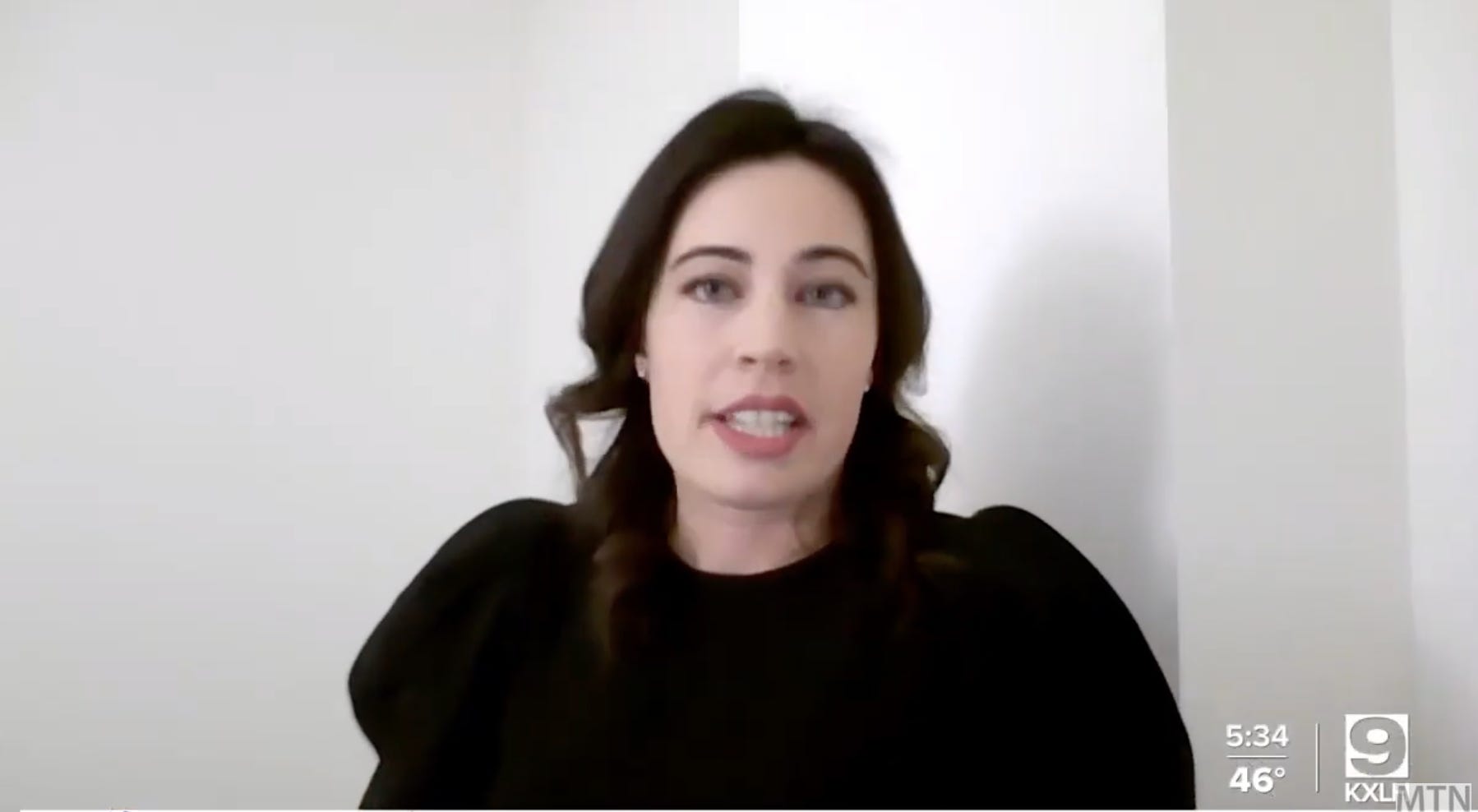
Tomorrow, the Senate Judiciary Committee is scheduled to hold a nominations hearing, which will likely feature the judicial nominees announced by Trump on February 12. That includes Katie Lane, nominated to the District of Montana.
Lane would be the second woman to ever serve as a lifetime district court judge in Montana — a state where a lifetime judge of color has never served. She would take the seat currently held by the first woman to serve on the court, Judge Susan Watters, whose semi-retirement to senior status is effective June 8, 2026.
I previously wrote about Lane’s astonishing lack of experience for a lifetime federal judgeship. She graduated from law school in 2017 — fewer than nine years ago. According to her Senate questionnaire, Lane was actually contacted by Senator Daines’ office in December 2024 about a vacancy on the District of Montana. This was when Lane was approximately 7.5 years out of law school. That vacancy was ultimately filled by William Mercer — but it is alarming that a senator would contact someone with so little legal experience to serve as a lifetime federal judge.
Lane clerked for Judge Timothy Tymkovich of the Tenth Circuit and Judge Thomas Varlan of the Eastern District of Tennessee — both appointed by President George W. Bush. Twelve days after Lane’s nomination, Judge Tymkovich announced he was taking senior status — handing Trump another circuit court seat to fill.
Lane spent just over a year as an associate at Jones Day before working for nearly two years in the Montana office of the attorney general, first as assistant solicitor general and then as deputy solicitor general. After a two-year stint as an associate at Consovoy McCarthy PLLC, she started in April 2025 as senior counsel for the Republican National Committee.
For someone nominated to serve as a lifetime federal judge, this is an incredibly short legal career — and it is well below what has historically been considered requisite legal experience for service on the federal bench. Lane’s rating from the American Bar Association’s Standing Committee on the Federal Judiciary has not yet been publicly released.
Lane has spent her very short legal career working to diminish civil and human rights
Katie Lane is unqualified both because of her inexperience and because of her work in opposition to civil and human rights.
In his announcement of Lane’s nomination, Trump wrote that “Katie brings fantastic experience to her new role, previously serving as Deputy Solicitor General of Montana, a State I love and won big three times! Katie has also played a critical role in stopping Voter Fraud as Senior Counsel for Litigation at the Republican National Committee.”
At a time when Trump and Republican lawmakers are seeking to enact heinous voter suppression legislation, and when the administration continues its assault on our democracy and the rule of law, it is unsurprising that Trump has nominated someone with Lane’s background to a lifetime judgeship.
And it is shameful that the committee is holding this hearing on the anniversary of voting rights marchers arriving in Montgomery, Alabama — following their march from Selma — in 1965, when Dr. King stated: “How long? Not long, because the arc of the moral universe is long, but it bends toward justice.”
Katie Lane’s nomination bends that arc in the wrong direction.
When asked on her Senate Judiciary Questionnaire to “Describe the ten (10) most significant litigated matters which you personally handled,” the first case Lane listed was McClure v. Jefferson County Commission. Lane represented the commission in Alabama when it was sued for racial gerrymandering in drawing district lines. Among the opposing counsel in that case were five lawyers with the NAACP Legal Defense Fund and former Judge U.W. Clemon — an iconic civil rights lawyer and the first Black lifetime judge to ever serve in the state of Alabama.
That Lane was working on the opposite side of them tells you everything you need to know about what she sought to accomplish in this case. Indeed, the court found “powerful circumstantial evidence of racial gerrymandering” in violation of the Equal Protection Clause of the 14th Amendment, with the judge saying that the commission’s “purported reliance on traditional redistricting criteria” was “not credible.”
In their letter opposing Lane’s confirmation, People For the American Way discussed another voting case, which — you guessed it — Lane listed second on her list of significant litigated matters. According to People For:
Lane also defended a Montana law that imposed criminal penalties for registering to vote in more than one place (including out of state), and for not providing previous voter registration info when registering. She represented the Republican National Committee, which had intervened in the case to help Montana defend the law. A federal district court enjoined enforcement of the law because it chilled voter registration even in situations where a person neither double-votes nor has any intention to do so. This overbreadth put it in violation of the First Amendment.
Lane also has an anti-abortion record. In their fact sheet about her nomination, Alliance for Justice (AFJ) noted some of Lane’s work in opposition to reproductive rights, including this:
During Lane’s tenure as the assistant solicitor general in the Montana Attorney General’s office, she asked the Montana Supreme Court to overturn a 23-year old precedent that created the state’s constitutional right to abortion. Citing the precedent as “fundamentally broken,” Lane initiated the suit to try and protect three controversial, restrictive abortion laws that the Montana legislature had recently passed.
AFJ characterized this as Lane having “no concern over whether the arguments she makes are fair, accurate, or even constitutional. She simply abuses her power to achieve political goals.” And it was not the only time she’s abused her power in pursuit of an unconstitutional goal. People For’s letter details the astonishing case of Randall Menges:
Lane defended Montana’s decision to force Randall Menges, who had moved to Montana, to register as a sex offender because he had been convicted in the 1990s of violating Idaho’s sodomy law. Such laws had long been used to persecute gay men until 2003, when they were held unconstitutional by the Supreme Court in Lawrence v. Texas. Yet nearly 20 years later, Lane defended applying the sexual registry law in this case. After a federal district court held that this violated Menges’s constitutional rights, Lane represented Montana in the appeal. While that appeal was pending, Idaho agreed not to require Menges to register as a sex offender in that state. Under Montana law, that meant that he no longer had to register there, either. When Lane asked the Ninth Circuit to dismiss the appeal as moot, she also unsuccessfully urged it to vacate the district court opinion. That would have ended the ability of other parties to cite it as persuasive precedent.
In September 2022, an AP story titled “Montana defies order on transgender birth certificates” began with this dramatic opening: “Just hours after a Montana judge blocked health officials from enforcing a state rule that would prevent transgender people from changing the gender on their birth certificate, the Republican-run state on Thursday said it would defy the order.”
That is when Lane was the assistant solicitor general of Montana. And it eventually led to discipline. According to AFJ’s letter opposing Lane’s confirmation:
Lane has also been publicly sanctioned for disrespecting the very institution she is now nominated to represent and uphold. In 2023, Montana District Court Judge Michael Moses found it necessary to issue a rare public rebuke of her behavior. Moses called out the State of Montana, at the time led by Lane, for disobeying court orders and misrepresenting facts in several court filings. Moses found the behavior so egregious and intentional that he ordered the government to pay the opposing party’s attorneys’ fees. In his order, he noted that this rare sanction was appropriate because Lane showed “flagrant disregard” for the court and “repeatedly disobeyed a lawful order...showing their contempt for this judicial body and the judicial system as a whole.”
Lane is also an opponent of affirmative action and DEI programs. As AFJ notes, “In Montana, Lane honed in on attacking diversity, equity, and inclusion access initiatives.”
This reflects her personal views as well. Last March, she participated in a Georgetown Law Federalist Society debate series titled “Do DEI Programs Violate Equal Protection?” — during which she stated that “since DEI amounts to racial classification, stereotyping, and sometimes blatant discrimination, it violates the 14th Amendment.”
“All of this goes back to what we already talked about with Chief Justice Roberts, who said the way to stop discrimination on the basis of race is to stop discriminating on the basis of race,” Lane said during her remarks. “And so, while I think that DEI programs do have a commendable goal, that when they offer benefits to individuals based solely on race or these other characteristics, they’re making assumptions about those individuals, which just perpetuates race consciousness and divisiveness in the workforce, education, etc.”
Lane joined Consovoy McCarthy PLLC in March 2023, in between the Students for Fair Admissions oral arguments and decision, as the firm represented Ed Blum and his efforts to end affirmative action in higher education. The Supreme Court in that case sided with Blum, and it is clear from Lane’s statements that she shares his views. Lane should be asked why she chose to join that particular firm at that particular moment in time.
Katie Lane’s disturbing record and disqualifying inexperience must be questioned during her confirmation hearing tomorrow. Committee members need to show up in person — and then ask written follow-up questions for the record.
Tune in here at 10:15 a.m. ET.