

Advocacy groups gear up for potential Supreme Court nomination battle, continue to call for reform
They’re preparing for a fight within the system as it exists today while urging judicial reform.
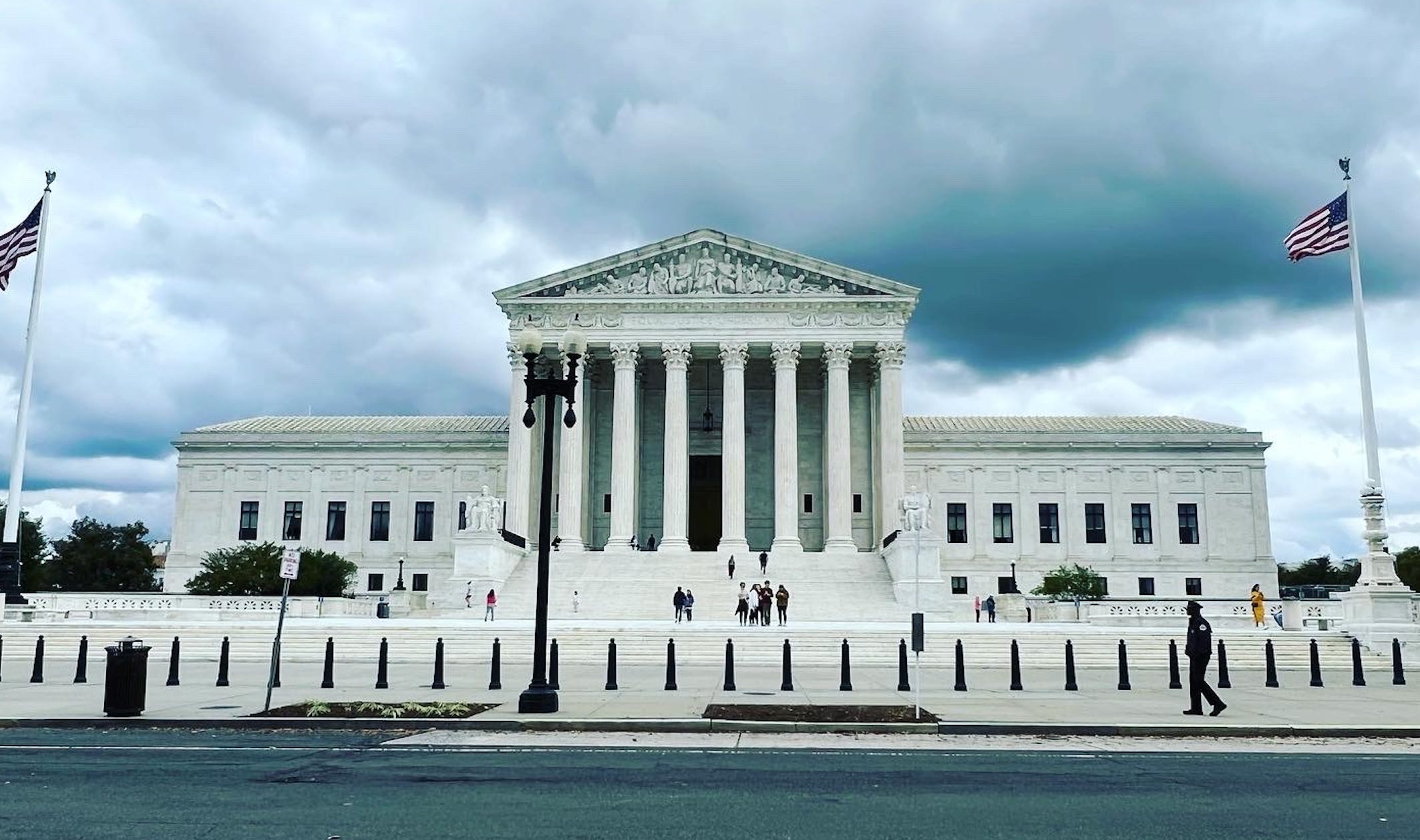
Advocates are preparing for what could be a fourth fight against a Trump Supreme Court nominee — a fight that, for a moment on Tuesday, appeared to be starting when NPR mistakenly reported that Justice Samuel Alito was retiring.
“NPR’s reporting that Justice Alito is retiring was early. But it wasn’t wrong,” stated a memo released the following morning from Demand Justice and Indivisible, two organizations that are preparing for a potential Supreme Court vacancy campaign.
“We know that Donald Trump will do whatever he can to hold onto power, and we are prepared for him trying to force Alito, Thomas, or both off the bench this year, while Republicans still control the Senate and can ram through a replacement,” the memo said. “That’s why Demand Justice invested $3 million to prepare for a 2026 Supreme Court fight, why we’re ready to spend millions more, and why we partnered with Indivisible to harness the energy of grassroots networks nationwide against whomever Trump picks.”
The organizations are expanding their campaign with an additional focus on Republican senators, including Senators Cassidy, Collins, Cornyn, McConnell, Murkowski, Tillis, and others. They emphasized that “Trump will choose his nominee for one reason: loyalty.”
In their own announcement yesterday, Alliance for Justice (AFJ) released a compilation of research about 30 potential Supreme Court nominees. The research reveals a “troubling pattern” among the possible nominees, AFJ said, calling out their “records marked by loyalty to Donald Trump, hostility toward fundamental rights, and decisions that favor powerful billionaires and corporate interests over working people and communities.”
Included on the list are 24 federal judges confirmed during Trump’s first term, including 21 appellate judges and three district court judges. The other six are from Trump’s second term, including three individuals confirmed to the appellate bench (Emil Bove, Jennifer Mascott, and Justin Smith) and three others who currently work in the Department of Justice (Todd Blanche, Harmeet Dhillon, and John Sauer). Five of the six have worked as a personal lawyer for Trump, and the other (Mascott) worked in the Trump White House prior to her confirmation. Bove, of course, also worked at the Trump DOJ.
“Americans deserve to know exactly who could be entrusted with a lifetime seat on the highest court in the country,” said Rachel Rossi, president of AFJ, in their press release. “Our research goes beyond headlines to examine how these judges have ruled, whose interests they have protected, and what their records tell us about the future of our constitutional rights. Alliance for Justice will continue serving as the nation’s leading resource for rigorous, fact-based analysis throughout any Supreme Court nomination process.”
The research, which AFJ says they will continue to update, “demonstrates that many of the potential candidates have consistently placed political ideology above judicial independence. Several have close ideological ties to the judicial philosophy advanced by Justices Samuel Alito and Clarence Thomas, reflecting a broader effort to reshape the Supreme Court into a vehicle for consolidating political power rather than serving as an independent check on it.”
Calls for reform
Advocates are preparing for this fight within the system as it exists today while calling for judicial reform — including and especially to the Supreme Court.
People For the American Way, which for decades has also played a leading role in Supreme Court confirmation battles, renewed its calls for reform — and for elected officials with the will to make it happen. “It is terrifying to imagine how many Americans will be harmed by this ruling and the way that Donald Trump and Russell Vought will implement it,” said Svante Myrick, the organization’s president, in the wake of the Trump v. Slaughter decision. “It is clearer than ever that the Court majority is on a destructive and illegitimate power trip and must be checked by a Congress and President who are committed to court reform. Voters, our task is clear.”
They weren’t the only group to point to the Slaughter decision as proof that reform is necessary.
“Protecting our freedoms from corporate abuses is even more critical as Trump and Republicans in Congress prioritize Big Polluters and their corporate billionaire friends, and today’s decision from Trump’s MAGA Supreme Court only helps their agenda,” said Doug Lindner, senior director of judiciary and democracy at the League of Conservation Voters. “At the next opportunity, Congress must expand and rebalance this captured Supreme Court with four new seats for pro-democracy, pro-environment justices.”
Josh Orton, president of Demand Justice, called for reform as well after that decision came down, saying that “A Supreme Court that hands unchecked power to Donald Trump and his billionaire backers isn’t a court working for the American people — it’s a tool of oligarchy. And we must build a movement to bring long-overdue reform.”
Civil rights advocates have also been urging reform in the wake of the Supreme Court’s further evisceration of the Voting Rights Act in its Callais decision.
Damon T. Hewitt, president and executive director of the Lawyers’ Committee for Civil Rights Under Law, said that in addition to advocacy and litigation to protect voting rights, “We must also pursue reform of the Supreme Court, which has become both logically and morally bankrupt. Our democracy depends on it.”
“We are in a state of poly-crisis in America. At its center is the Supreme Court of the United States,” wrote Janai Nelson, president and director-counsel of the NAACP Legal Defense Fund (LDF), in a Bluesky thread. “When the Supreme Court ceases even to pretend to be a forum of objectivity, we MUST call for its immediate reform. And we MUST have a Congress that will do the job.”
Two weeks after the Callais decision, civil rights lawyer Sherrilyn Ifill — the Howard Law School Vernon Jordan Distinguished Professor in Civil Rights and LDF’s former president and director-counsel — wrote in her newsletter that Supreme Court reform is part of the “formula that is necessary to put rampant, lawless white supremacy and its democracy-destroying force back on the leash.” As she said:
And we need a Supreme Court that is prepared to uphold a structure of laws that protect democracy in our country, and that has the integrity and vision to do what is needed to hold democracy in 21st century America. That reformed Court will need to be expanded in size, constrained in power, adherent to ethics, and populated with justices who have the legal, intellectual, moral, and experiential skills, combined with the integrity, courage and sophistication to fairly adjudicate the complex array [of] questions and controversies that emerge from a multiracial democracy of three hundred and forty million people in the 21st century.
After the Supreme Court’s extremist majority allowed the administration to end Temporary Protected Status (TPS) for 350,000 Haitian immigrants, the NAACP also noted the need for reform. “At every turn, we see this administration undertaking policy motivated by a toxic combination of racism and xenophobia, intended to dehumanize, diminish, and erase Black people’s presence, our political power and our voice,” said Kristen Clarke, general counsel of the NAACP. “There is no doubt that Supreme Court reform must be a part of our democracy reform agenda.” Clarke served as assistant attorney general for civil rights at the Department of Justice during the Biden administration.
During that administration, President Joe Biden and Vice President Kamala Harris came out in support of 18-year term limits for Supreme Court justices and a binding code of conduct for the Supreme Court.
That is just the beginning of a reform agenda that many advocates are calling for. As Myrick of People For the American Way said: “Voters, our task is clear.”